

 Germany
Oberhof
About the track
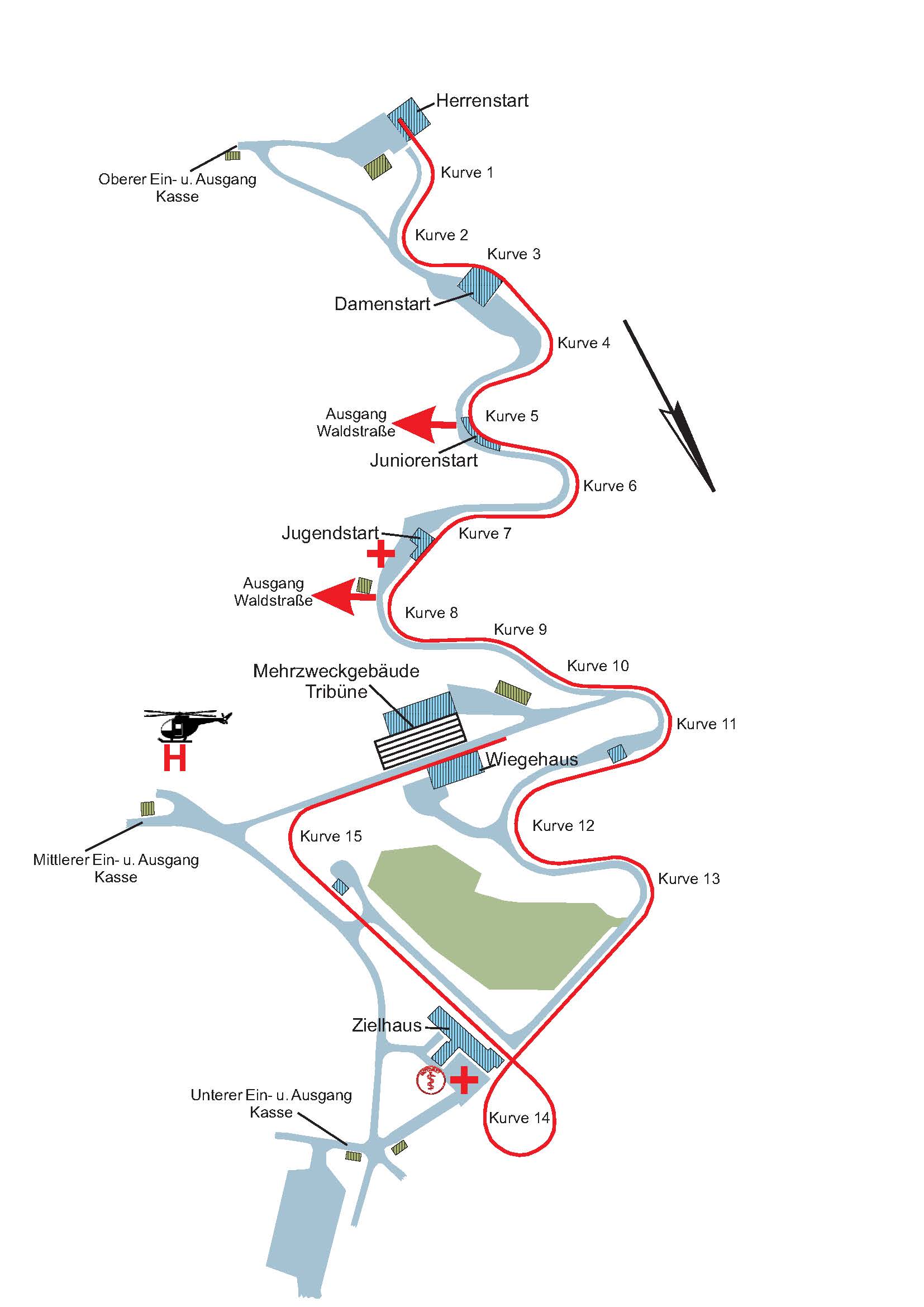
Oberhof is one of those tracks where an athlete has to be ready to work from the very first metres. There is little time to rest – curves and transitions follow one another, and any inaccuracy very quickly affects the next section of the track. Oberhof is definitely one of…
Key curves
The key point of the track, where precision and rhythm decide the result.
The whole layout demands a consistent rhythm and a precise line.
The top speed shows the dynamics and technical difficulty of the track.
Track character
Oberhof is one of those tracks where an athlete has to be ready to work from the very first metres. There is little time to rest – curves and transitions follow one another, and any inaccuracy very quickly affects the next section of the track. Oberhof is definitely one of the technical, or in lugers' language "working", tracks. Good sleds and speed alone are not enough here; you need a precise line and concentration for the whole run.
Keeping the rhythm is especially important. If a mistake is made in one curve, the athlete often has no chance to calmly prepare for the next one – the track immediately demands the next move. It is in moments like these that Oberhof shows its character. The harder you try to force a correction of an earlier mistake, the more likely you are to lose even more time.
A good run in Oberhof is one where, from the outside, it looks as if the athlete is doing almost nothing. In reality this apparent calm hides very precise work with the sled. This is a track that teaches you not only to go fast but also to think several curves ahead. And when you manage to put the whole run together, there is that special feeling at the finish – this time you have beaten not only your rivals but the track itself.
Altenberg, GermanyAltenberg
 Calgary, Canada
Calgary
 Italy
Cortina d'Ampezzo
 Innsbruck-Igls, Austria
Innsbruck-Igls
Schönau am Königssee, GermanyKönigssee
 Lake Placid, New York, United States
Lake Placid
 Lillehammer, Norway
Lillehammer
Park City, United StatesPark City
 PyeongChang, South Korea
PyeongChang
 Sigulda, Latvia
Sigulda
 Sochi, Russia
Sochi
Whistler, CanadaWhistler
Winterberg, GermanyWinterberg
 Yanqing, China